greenwashing
" Talking
green is easy.
Acting
green, not so much. "
As sustainability becomes a selling point, some companies exploit it without real actions.
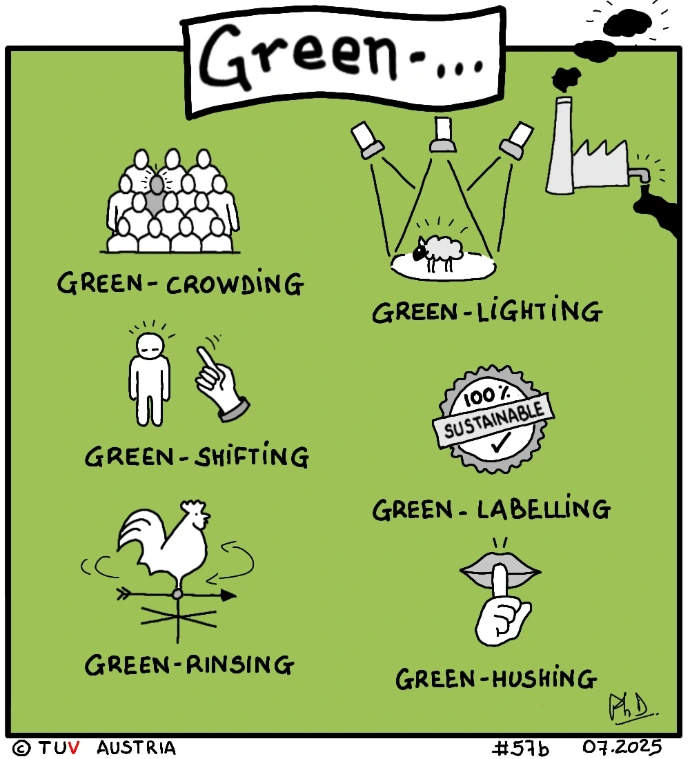
The following 6 forms of greenwashing show how misleading strategies can disguise environmental inaction :
1.
Green-crowding
Companies
hide behind group commitments to appear eco-conscious without real action. They
rely on collective efforts to avoid scrutiny and mask their individual
environmental inaction.
2.
Green-lighting
A small
green initiative is highlighted to distract from larger polluting practices.
It’s a PR tactic that exaggerates one positive detail while ignoring the
company’s overall environmental harm.
3.
Green-shifting
The company
shifts environmental responsibility to the consumer, focusing on personal
choices while downplaying its own environmental footprint and role in
climate-related issues.
4.
Green-labelling
Vague,
unverified terms like “green” or “natural” are used to suggest sustainability.
These labels mislead consumers and are detrimental to genuine conformity marks
based on evidence and professional assessment by independent 3rd parties.
5.
Green-rinsing
Firms
regularly revise environmental goals, often lowering them. This creates the
illusion of progress while avoiding real accountability or measurable climate
action.
6.
Green-hushing
Companies
deliberately stay silent about their sustainability actions to avoid criticism.
This lack of transparency limits comparison and slows collective progress
toward environmental responsibility.
As a certification body, TÜV AUSTRIA OKcert works tirelessly to combat greenwashing by promoting conformity marks based on facts and analyses carried out by competent experts.