Monitoring - How it works
Monitoring is an important part of our activities. We
constantly check that the products on the market are identical to those that
were originally certified and we track any misuse of our conformity marks, in
the interests of consumers and companies that have invested in
standards-compliant products.
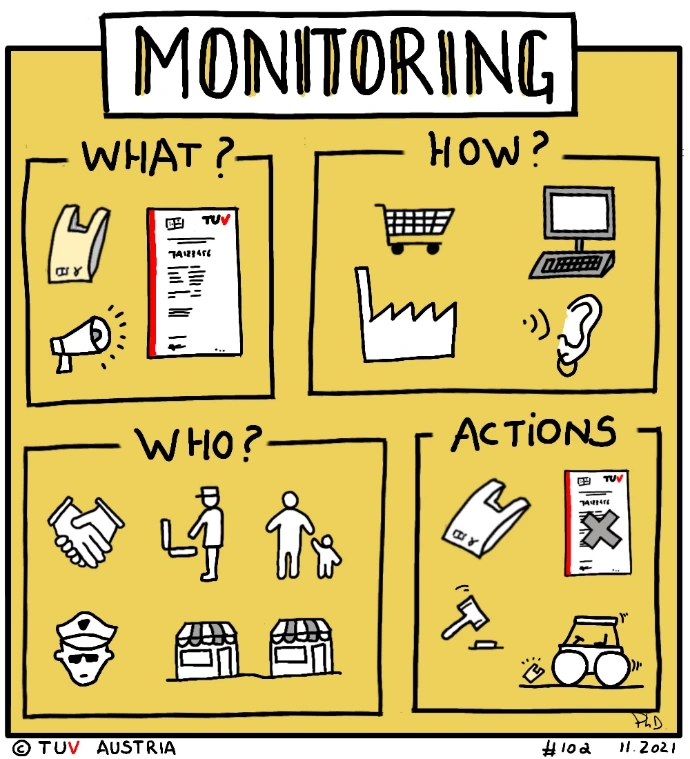
WHAT do we check?
- We check that the products on the market displaying our logos are indeed certified and still conform to those that have been assessed by our engineers;
- We track any misleading or deceptive statements and communications;
- We check the validity and veracity of certificates appearing on many websites.
HOW do we check?
- By analysing in detail samples from the market or from producers' stocks;
- By surfing the Internet (websites, LinkedIn, Amazon and Alibaba, …);
- By paying attention to what is being said everywhere, on markets and fairs.
WHO is helping us in these monitoring operations?
- Our partners, in more than 20 countries, who are responsible for taking samples from the market;
- The authorities, police or customs, during import controls or in case of complaints or suspicions;
- Citizens, who wonder and send us suspects products;
- But also local competitors who want to clean up the markets in which they have invested!
ACTIONS resulting from this?
- Our legal department systematically prosecutes any company that misuses our compliance marks;
- When minor non-conformities are detected, we ask to correct them quickly;
- When these discrepancies compromise the integrity of our conformity marks, we revoke the certificates, recall the non-compliant products from the market or even have them massively destroyed.
Check by yourself
There are several ways to check whether a product or
certificate is potentially fraudulent by checking certain elements via the online database.
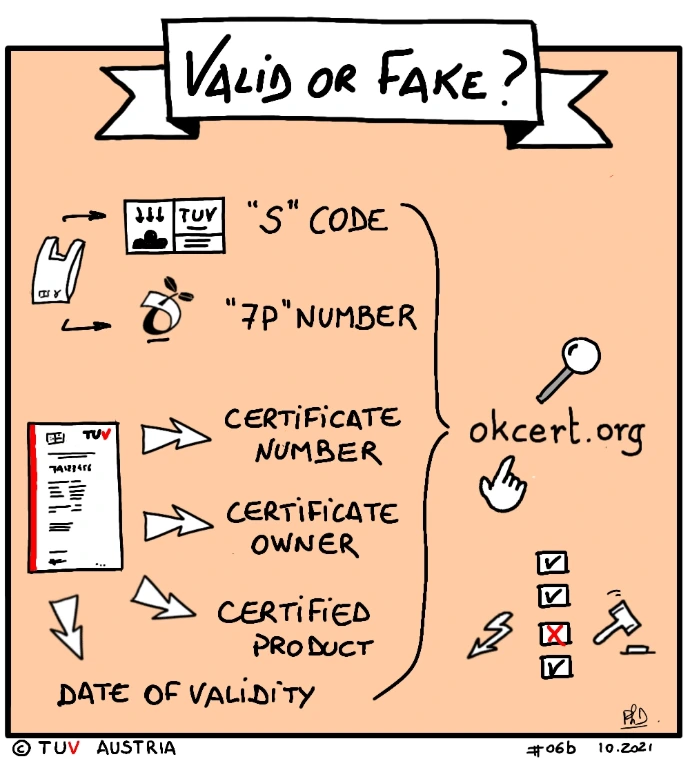
- Each of our "OK" logos on a certified product contains a code in the bottom right-hand corner beginning with "S". This code, called the "S-code", is specific to a single licensee and may not be used by another licensee.
- Each seedling logo on a certified product is accompanied by a code starting with "7P".This code is a unique reference to the certificate covering the product in question.
- The certificates contain a lot of information
such as
a. The certificate reference
b. A short description of the certified product(s)
c. The name of the owner of the certificate
d. The validity dates of the certificate
By searching in the online database for one of these data, you can obtain the identification sheet of the certified product(s): manufacturer, commercial name, thickness, colour, ... depending on the certified product, ...
A guideline to facilitate your search is also available (here).
If the search returns different information from what you have, or if it does not return any results; it means that the certificate is withdrawn, or it is a fake or the search keys are not correct.
In all cases, prosecutions are initiated.