Guidelines for home composters
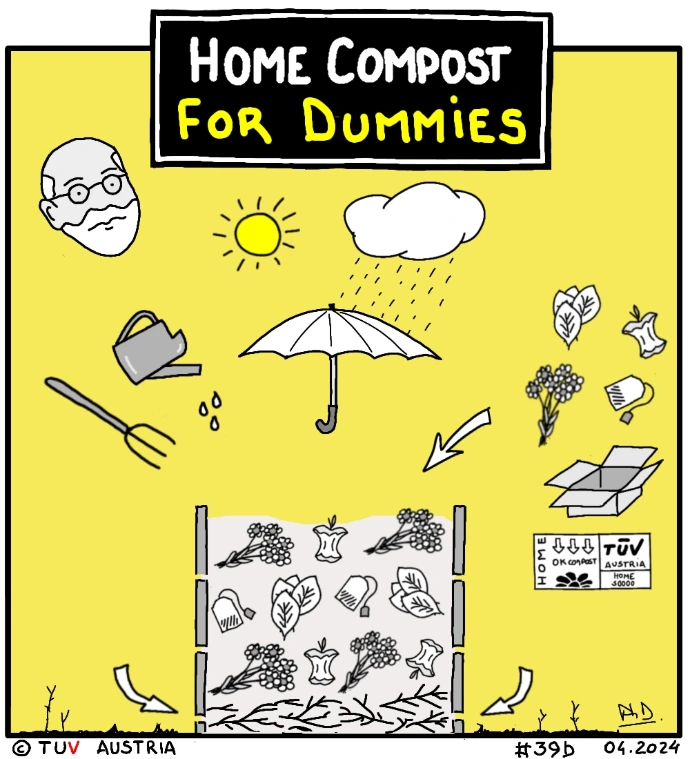
Home compost for dummies
Here are the steps to follow :
Choose
the right spot
Choose
a shady spot in your garden, sheltered from the rain;
Use
the right bin
You
can use a ready-made compost bin or make your own from recycled materials.
It
is important that it is properly ventilated, but not too much, otherwise it
will dry out and get cold.
It is
also better that it remains in contact with the soil so that it can interact
with it;
Add
the right elements
Start
with coarse items such as branches to ensure good aeration under the compost,
then alternate layers of moist green waste (rich in nitrogen), such as
fruit and vegetable remains, and brown waste, usually dry and (rich in
carbon), such as dead leaves or cardboard.
Also
try to mix rough and fine materials and avoid meat or cooked foods, which
attract pests.
Do
the right job
Stir
your compost regularly to encourage decomposition and water it if necessary to
maintain adequate moisture.
To
maintain your domestic compost, keep adding waste, maintaining a good balance
between green and brown elements.
We
tend not to add enough brown waste. Some manufactured products (cardboard, tea
bags or coffee capsules) are generally a good source of carbon, but only add Ok
compost HOME-certified items to ensure that they decompose properly without
having a negative effect on your compost.
Keep an eye on humidity and temperature,
and don't hesitate to adjust if necessary.
How do you check the moisture content?
Simply take a handful of material and squeeze it. If nothing flows between your
fingers, it's too dry and needs to be moistened. If water drips through, it's
too damp, so dry it by mixing it with dry materials. Finally, if a few drops
run through the fingers, humidity is ideal.
You'll soon have rich, fertile compost for your garden!
However, there are different practices and tips depending on the climate and geography.
Below you will find some tips to help you perfect your compost